Load a clip, then use its playback controls. Each video is about 3 MB and loads fully before playback.
Silent walkthrough. A text summary follows.
Load the clip to enable playback and seeking.
The silent walkthrough introduces four manual review examples: a new action without a cue, a timing shift, a changed object, and a removed action. The review cases below provide the findings in text with frames and human decision fields.
What changed?
Four review examples from three picture edits. Choose a finding to inspect its frames, cue text and timings.
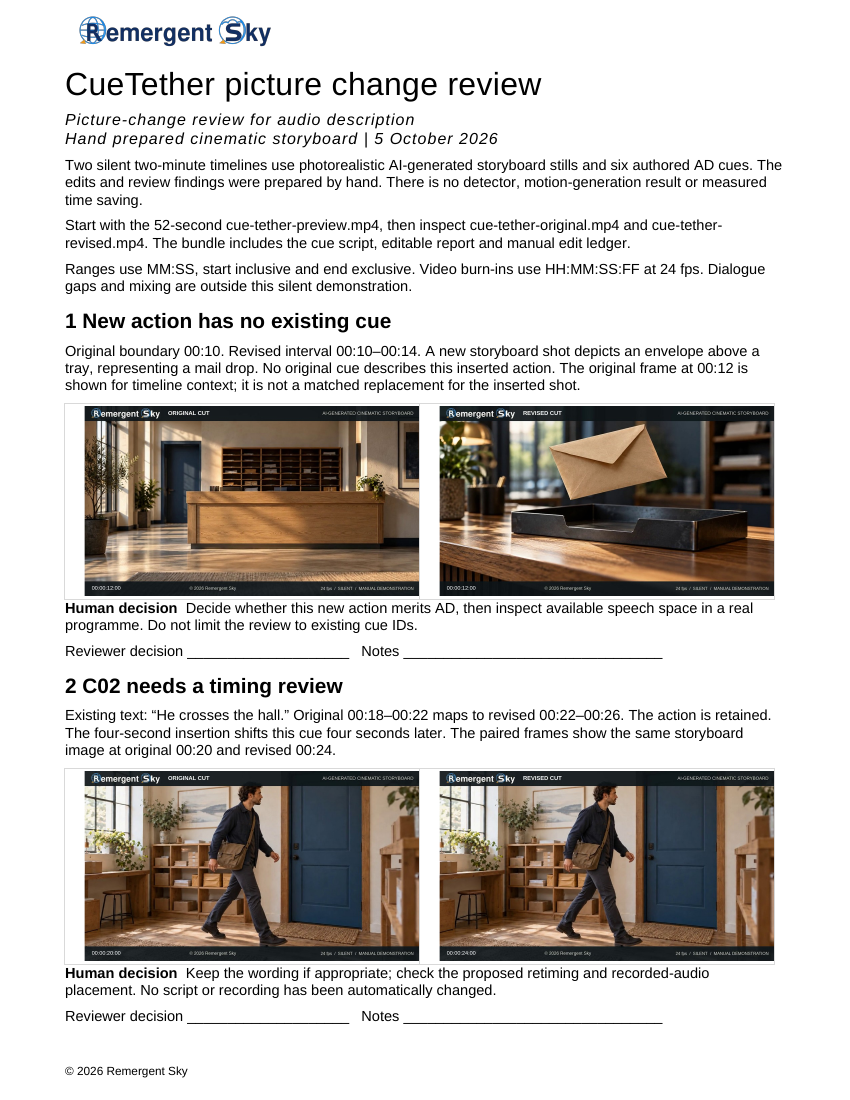
New action
No existing cue
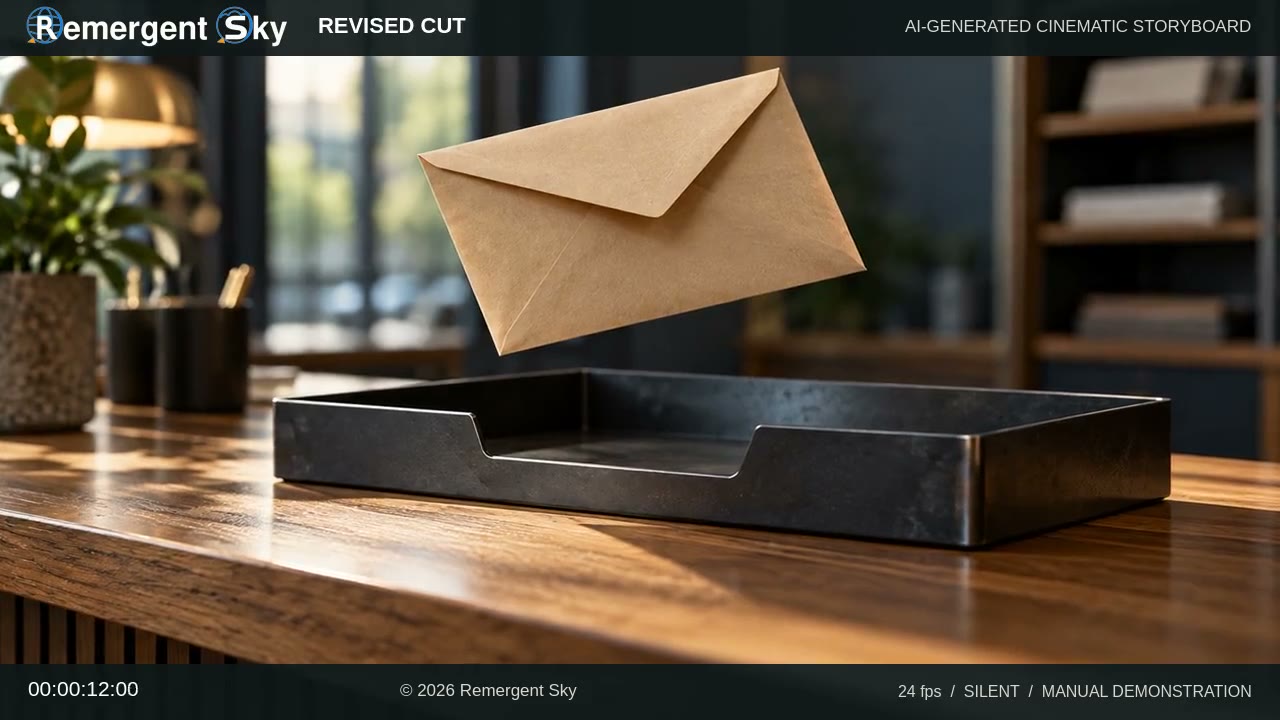
An inserted storyboard image depicts an envelope above a tray. No original cue covers it.
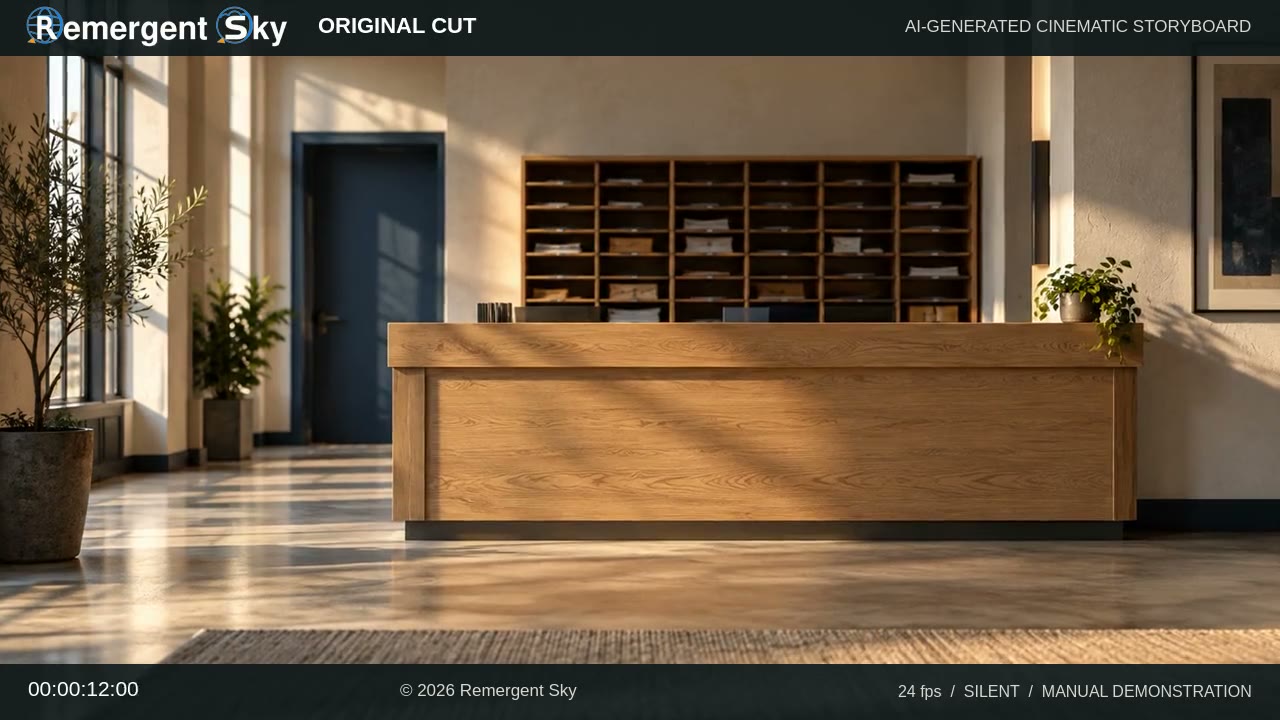
Original: Reference frame at 00:12Revised: 00:10 to 00:14
The insertion boundary is original 00:10. The original reference frame at 00:12 is shown for context, not as a matched replacement for the inserted shot.
Human decision
Decide whether the new action merits audio description, then inspect available speech space in a real programme.
Timing shift
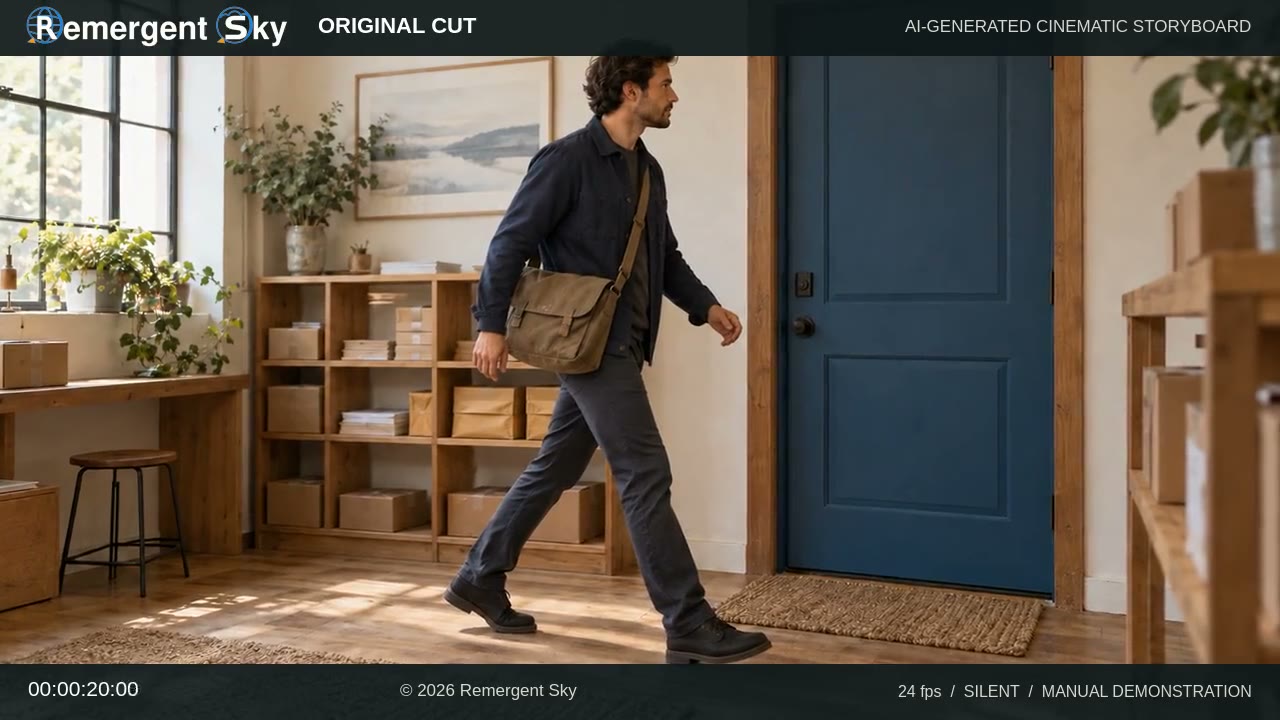
C02: "He crosses the hall."
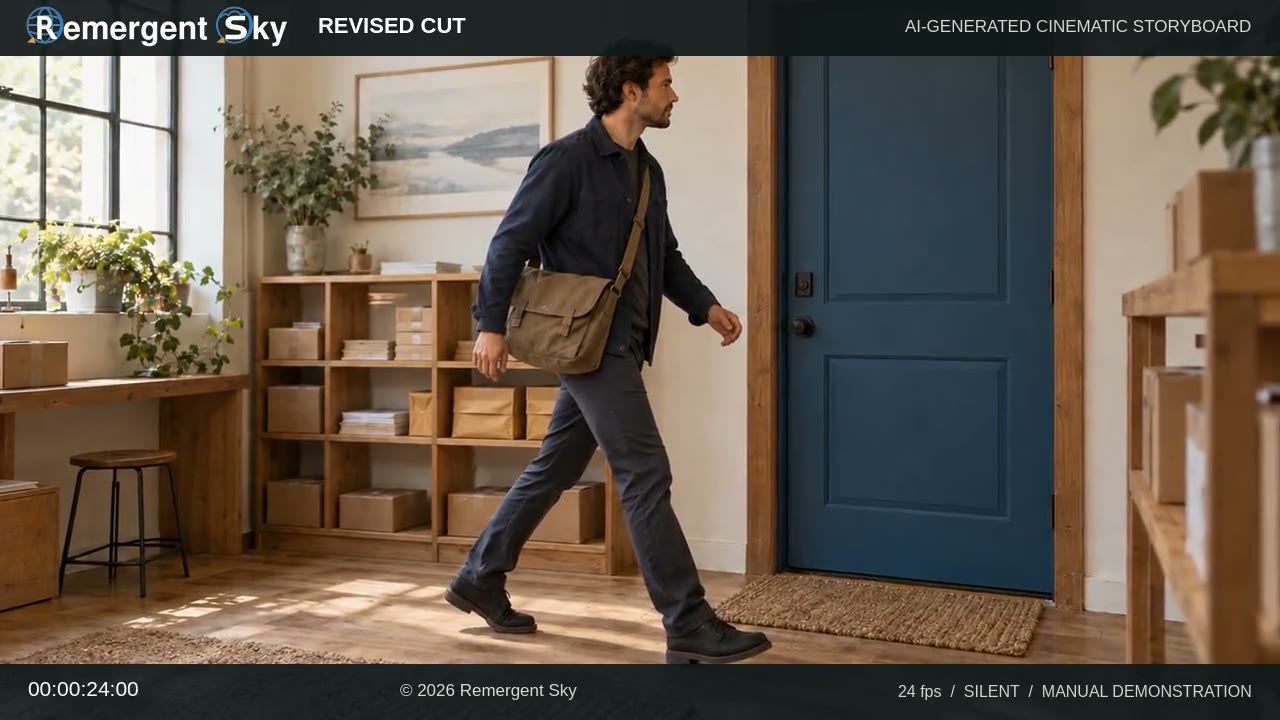
The storyboard picture is retained. The insertion moves the cue four seconds later.
Original: 00:18 to 00:22Revised: 00:22 to 00:26
The same picture appears at a different time. The wording may still fit.
Human decision
Review the proposed retiming and recorded-audio placement. No script or recording has been automatically changed.
Changed object
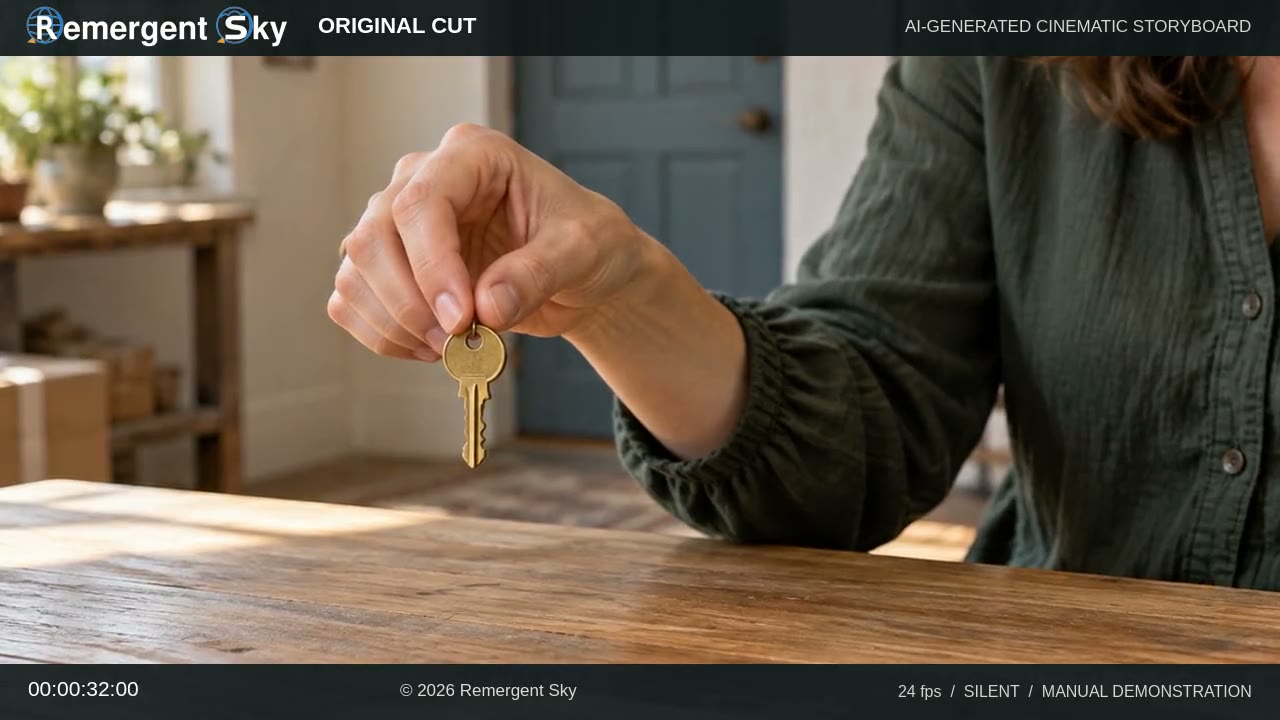
C03: "She picks up a key."
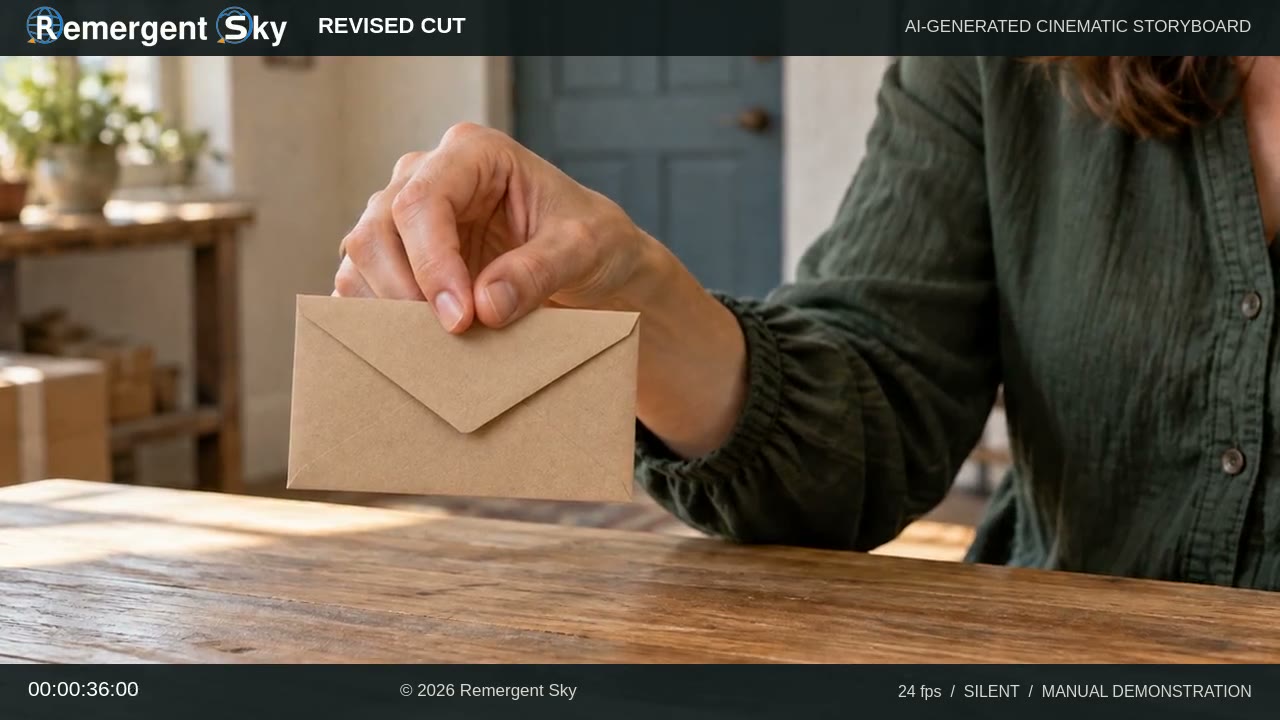
The revised storyboard shows an envelope where the original picture showed a key. The cue text no longer describes that object.
Original: 00:30 to 00:34Revised: 00:34 to 00:38
This is a hand-prepared still-image replacement, not evidence of motion understanding.
Human decision
Review the wording, timing and recording required for the revised picture.
Removed action
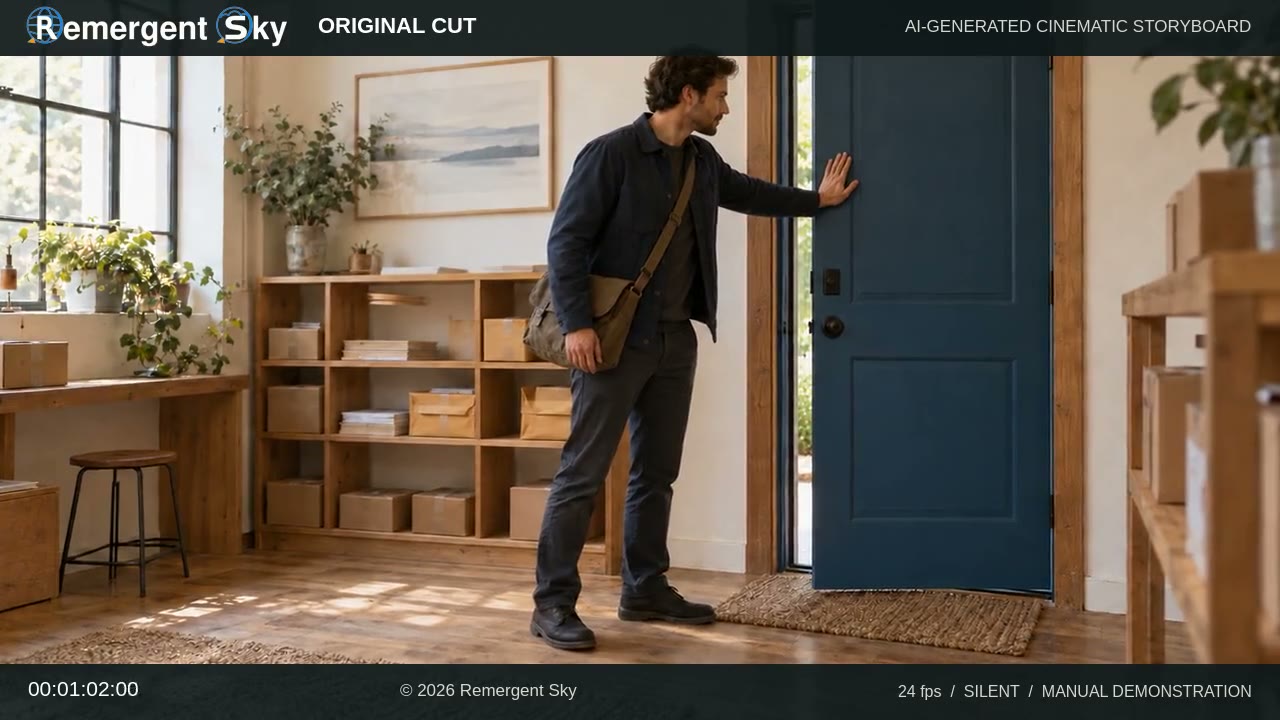
C04: "He closes the door."
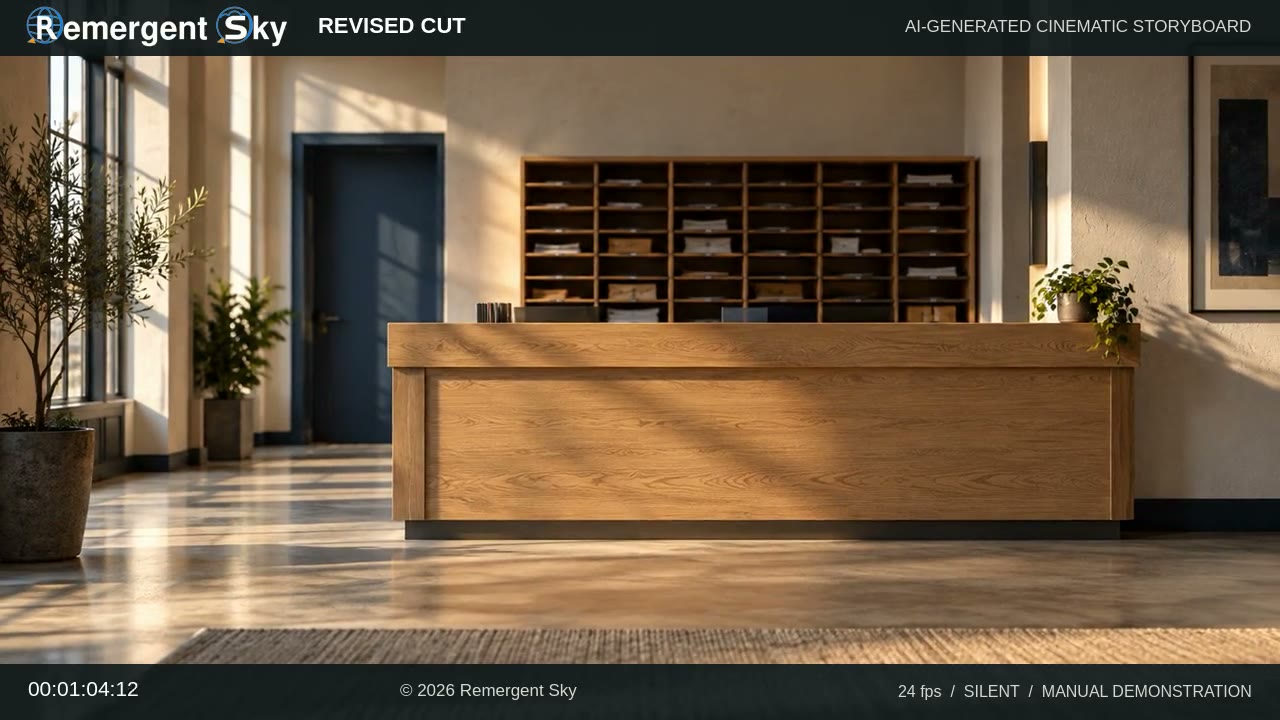
The four-second door-closing storyboard shot has been removed. The existing cue needs review.
Original: 01:00 to 01:04Revised: Removed at 01:04
The revised reference frame shows the material after the deletion. It is not a replacement for the removed action.
Human decision
Decide whether to remove or revise the cue and its recording. Check the surrounding sequence before making the change.
The insertion shifts retained material four seconds later until the deletion restores the original timing. Wording, retiming, recording, dialogue space, and mixing remain human decisions.
Compare the cuts.
Both timelines are two minutes at 24 frames per second. They are silent sequences of storyboard stills. Their equal length does not mean the cues still line up.
Original cut
Load the clip to enable playback and seeking.
The reference timeline for six authored AD cues.
Revised cut
Load the clip to enable playback and seeking.
A four-second insertion, an object replacement, and a four-second deletion.
These are hand-prepared edits. Inspect the case viewer for the exact changes; the clips do not demonstrate automatic detection.
Review the evidence.
A frame. A cue. A decision for a person.
The examples above pair frames with cue text, original and revised timings, and a decision for a human reviewer. This report excerpt shows how those findings can be presented for review.